Dead phones while traveling ranks somewhere between missing a flight and forgetting your passport. I’ve been stuck at airport gates with a dying battery more times than I want to admit, which is why I finally decided to test travel power banks seriously. Whether you call them portable chargers, external battery packs, or simply backup batteries, these devices are essential travel gear.
Travel power banks solve a specific problem: keeping your devices charged when outlets are scarce or nonexistent. They’re different from regular power banks because they need to meet airline regulations, fit easily in carry-ons, and deliver enough power for multiple devices without adding too much weight to your bag.
The most important factors when choosing a travel power bank are capacity (measured in milliamp hours or mAh), output power (measured in watts), and whether it complies with TSA regulations for lithium batteries. Size and weight matter too since you’ll be carrying this around all day. Some power banks also include features like fast charging, multiple ports, or built-in cables that can make or break the user experience. I tested twelve different travel power banks to find the ones that actually deliver reliable charging without being a hassle to pack or use.
Best Travel Power Banks
I tested dozens of portable chargers to find the ones that actually deliver on capacity, speed, and durability when you’re on the road. Below is my full list of the best travel power banks I’ve tested so far.
Anker 20,000mAh Power Bank

This power bank delivers serious charging power with a built-in cable that eliminates the “forgot my cable” problem entirely.
Pros
- Built-in USB-C cable means one less thing to remember when packing
- 87W total output charges multiple devices quickly including laptops
- TSA-approved capacity works perfectly for air travel
Cons
- Noticeably heavy at over 15 ounces in your bag
- Takes up more space than compact 10,000mAh alternatives
- Premium features come with a higher price point
I threw this in my carry-on for a recent work trip and immediately appreciated the built-in cable. My iPhone charged to 58% in half an hour without digging through my bag for a separate cord. The cable tucks neatly into the side when not in use.
The 87W output impressed me when I plugged in my MacBook Pro alongside my phone. Both charged simultaneously without the sluggish speeds I’ve experienced with weaker power banks. My laptop hit 50% in under 40 minutes, which saved me during a layover when outlets were scarce.
Weight is the tradeoff here. At 15 ounces, I definitely felt it in my backpack during a full day of walking around. The size isn’t massive, but it’s noticeably bulkier than lighter travel options.
The 20,000mAh capacity gave me multiple full charges on my iPhone throughout a long travel day. I recharged the power bank itself in about 90 minutes using my 65W laptop charger, which beat the overnight charging I’m used to with older models.
The extra USB-C port and USB-A port came in handy when my travel companion needed a charge. I powered three devices at once without issue, though total output splits across all ports when you use them simultaneously.
Anker 25K Laptop Power Bank
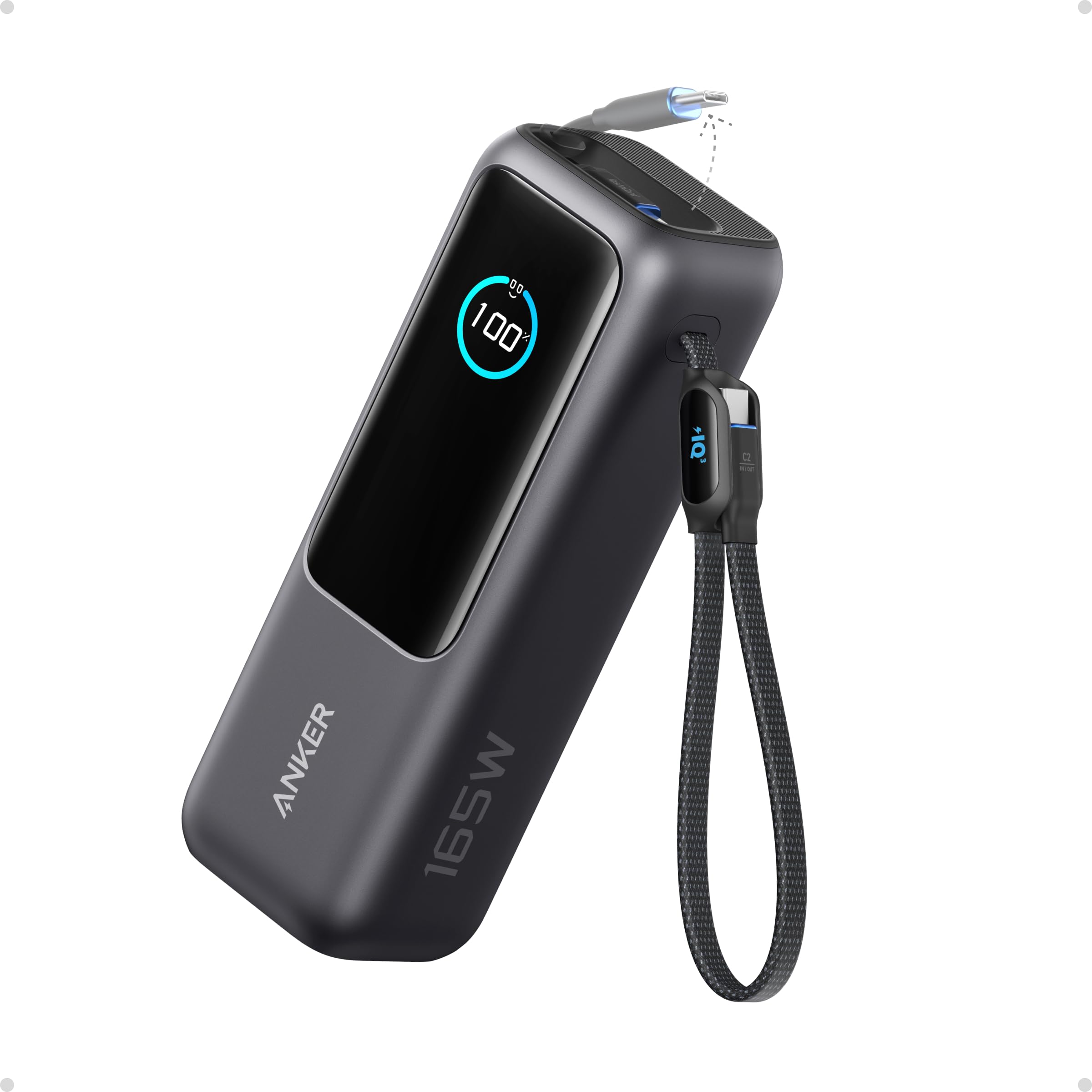
If you need a high-capacity power bank that can charge a laptop and three other devices simultaneously without carrying extra cables, this Anker model delivers impressive performance despite its chunky size.
Pros
- Built-in retractable USB-C cable eliminates the need to carry separate charging cords
- Three high‑wattage USB‑C ports (up to 100W on supported ports, 165W total shared).
- Recharges to 30% in roughly 22 minutes when paired with a decent wall adapter
Cons
- Noticeably heavy and bulky at nearly a pound
- Requires a 45W or higher charger to take advantage of fast recharging speeds
- Takes up significant space in bags compared to slimmer alternatives
I grabbed this power bank before a multi-week trip where I knew I’d be away from outlets for extended stretches. The integrated cables immediately proved useful since I didn’t have to dig through my bag searching for the right cord when my phone hit 10%.
The retractable cable extends to a little over two feet, which gave me enough reach to use my device while it charged. I appreciated how sturdy it felt after weeks of repeated use. The second cable works as a carry strap, which seemed gimmicky at first but actually made it easier to grab from my backpack’s side pocket.
Charging my laptop from this power bank worked smoothly, though the unit does have some heft to it. I found myself wishing it was lighter when carrying it around all day. The capacity handled my laptop, phone, earbuds, and a tablet without issue during a full workday off-grid.
The fast recharge capability matters more than I expected. When I had access to power for just 30 minutes between meetings, I could get enough juice back into the power bank to make it through the rest of the day. Just make sure you have a proper wall charger since lower-wattage adapters slow things down considerably.
INIU Ultra Slim 45W Power Bank

This compact charger delivers genuinely fast charging speeds and fits easily in any travel bag, making it a solid choice if you need reliable power on the go.
Pros
- Noticeably smaller and lighter than other 10,000mAh banks I’ve carried
- Both USB-C ports work for charging devices or recharging the bank itself
- Fast charging actually lives up to the claim based on my iPhone tests
Cons
- Only includes a USB-C cable, so iPhone users need to bring their own Lightning cord
- The soft-touch coating might show wear over time with heavy use
- Three-device charging works but slows down the overall speed considerably
I needed something that wouldn’t weigh down my daypack during a recent trip. Most 10,000mAh banks feel like bricks, but this one caught my attention because of its slim profile.
The size difference is real. I compared it directly to my old Anker, and this INIU model is noticeably thinner and lighter. It slips into jacket pockets without creating an awkward bulge, which I appreciated during flights when I wanted to keep it accessible.
Charging my iPhone went faster than expected. I plugged in at 15% battery and hit 70% in about half an hour, which got me through a long layover without stress. The little paw print indicator is a nice touch that shows remaining capacity at a glance.
Having two USB-C ports that both work for input and output turned out more useful than I anticipated. I could charge my phone while simultaneously topping up the power bank itself from a wall outlet. Most competitors force you to choose one or the other because they reserve the USB-C port exclusively for recharging.
The included cable doubles as a lanyard, though I mostly used it as a short charging cord. It’s only about five inches long, so it works best when the power bank sits right next to your device. I ended up using my own longer cables most of the time.
Three simultaneous charging ports sound great until you actually try using all of them. The charging speed drops noticeably when I plugged in my phone, tablet, and earbuds together. For emergency situations it works fine, but I typically stuck to charging one or two devices at once for better performance.
The 10,000mAh capacity gave me about two full iPhone charges before needing a refill. That covered a full day of heavy use during travel, which is exactly what I needed. Recharging the bank itself took around two hours when I used a decent wall adapter.
Build quality feels solid despite the lightweight design. The matte black finish resists fingerprints well, and nothing feels cheap or flimsy. After several weeks of tossing it in and out of bags, it still looks basically new with just minor scuffing on the corners.
OHOVIV 50000mAh Power Bank
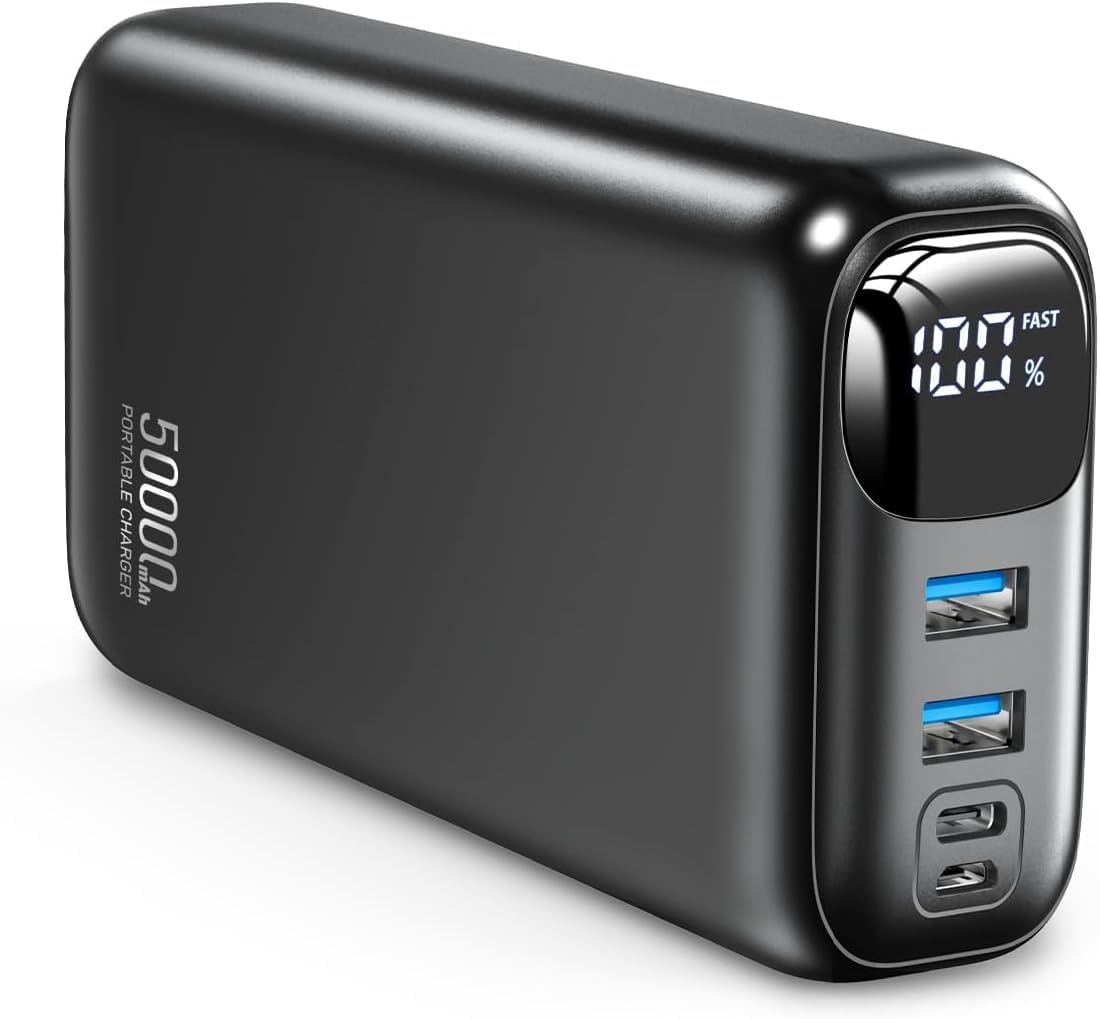
This is an excellent choice if you need serious charging capacity for extended trips where outlets are scarce, though you’ll need to check it in your luggage since it’s not allowed on planes.
Pros
- Charges my phone from empty to over half full in just 30 minutes
- The LED display shows exact battery percentage remaining instead of vague indicator lights
- Can power three devices simultaneously without slowing down noticeably
Cons
- Cannot take on airplanes due to exceeding 160Wh
- Weighs about 1.4 pounds, which adds noticeable heft to a daypack
- Takes several hours to fully recharge the unit itself
I tested this power bank during a weekend camping trip where I knew I’d be away from power sources. The display immediately caught my attention because it shows the remaining charge as a number rather than dots or bars, which means I actually know when I need to top it up.
Charging speed impressed me right away. My phone went from dead to usable in under half an hour, which meant I could quickly grab some juice before heading back out on the trail. The three ports came in handy when my partner and I both needed charging at the same time, plus I could keep my headphones topped off.
The size and weight are worth mentioning because this isn’t a slip-it-in-your-pocket kind of power bank. It’s roughly the size of a thick smartphone case stacked with another phone, and you’ll feel it in your bag. That said, the capacity justifies the bulk since I got multiple full charges out of it over several days.
One major drawback hit me when I was planning a flight: this power bank exceeds airline limits for portable batteries. If you fly frequently and want something for layovers, this won’t work for you.
The build quality feels solid, with a matte finish that doesn’t show fingerprints or scratches easily. After using it outdoors and tossing it in various bags, it still looks new. The included USB-C cable worked fine, though I ended up using my own cables most of the time anyway.
Anker PowerCore Slim 10K
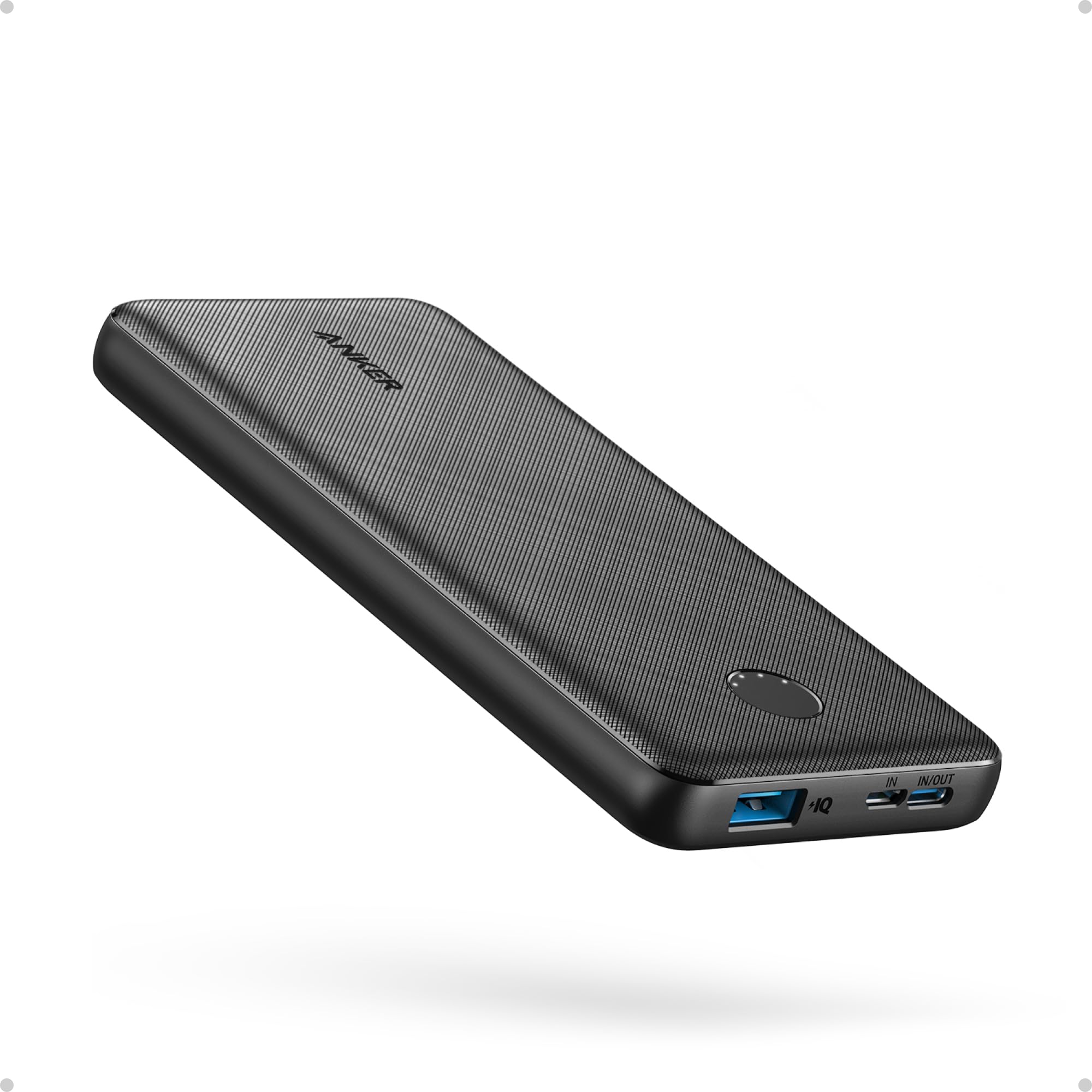
This power bank delivers reliable charging in a genuinely pocketable form factor, making it ideal for travelers who need dependable backup power without the bulk.
Pros
- Surprisingly thin profile fits easily in coat pockets or small bags
- USB-C port handles both charging and output without needing multiple cables
- Survived my accidental drops without a scratch thanks to solid build quality
Cons
- Takes longer than expected to fully recharge the power bank itself
- Only has a basic LED indicator, not a numeric percentage, so you’re often guessing remaining battery.
- Single USB-A port limits simultaneous device charging options
I started carrying this power bank during a recent trip when my phone consistently died before dinner. The slim design impressed me immediately because it slipped into my jacket pocket without creating that awkward bulge most chargers cause. At 8.6 ounces, I barely noticed it was there throughout long walking days.
The charging speed kept up with my needs perfectly. My iPhone went from 15% to full in about an hour, and I still had enough juice left for another complete charge the next day. The two-way USB-C feature simplified my packing since I could use the same cable for both my phone and the power bank.
Build quality stands out as genuinely robust. I accidentally knocked it off a table onto concrete, and it didn’t even pick up a scuff mark. That kind of durability matters when you’re constantly pulling it in and out of bags.
The main drawback hit me on day three when I needed to recharge the bank itself. It took nearly four hours to reach full capacity, which meant planning ahead instead of quick top-ups. I also found myself guessing at remaining battery since there’s no display or LED array to check levels at a glance.
For travel specifically, the compact dimensions work better than larger capacity options. It recharged my devices enough times to get through two full days away from outlets, which covered most of my weekend trips. The USB-A port handled my older accessories without issues, though I wish it had two USB-C ports instead for newer gear.
Buying Guide
When I started researching travel power banks, I quickly realized capacity matters less than I thought. A 10,000mAh bank won’t actually deliver 10,000mAh to your phone because energy is lost during conversion. However, there are several other critical technical specs that determine whether a portable charger is actually useful or just dead weight.
TSA and Airline Regulations for Batteries
Before you buy a high-capacity unit, you must understand flight rules. The FAA and TSA mandate that all loose lithium-ion batteries must be packed in carry-on luggage, never checked bags. But there is a limit on size:
- Under 100Wh: Allowed in carry-on bags without special permission. This covers almost all 10,000mAh and 20,000mAh power banks.
- 100Wh to 160Wh: Requires airline approval. You usually can carry up to two of these, but it’s at the discretion of the airline.
- Over 160Wh: Completely prohibited on passenger flights.
To calculate Watt-hours (Wh) if it isn’t listed on the device, use this formula: (mAh / 1000) x Voltage = Wh. A standard 20,000mAh bank at 3.7V is roughly 74Wh, making it safe for travel.
Capacity vs. Real-World Charging
Look for the actual output rating, usually listed in watt-hours (Wh). A 20,000mAh bank typically delivers about 12,000-13,000mAh of usable power due to voltage conversion and heat loss. That’s roughly 3-4 full charges for most phones.
I learned the hard way that anything over 27,000mAh (approx 100Wh) isn’t allowed on planes. Stick below that limit if you fly often.
Charging Speed Standards
Check both input and output wattage. A 20W output charges phones at normal speed, but 30W or higher handles tablets and some laptops. Fast input (18W+) means less time plugged into a wall before your next trip.
USB-C PD (Power Delivery) is non-negotiable for me now. It charges modern devices faster and works bidirectionally, so one cable charges both your phone and the bank itself. If you are an Android user, look for QC 3.0 (Quick Charge) compatibility to ensure you get maximum speeds.
Ports and Compatibility
| Feature | Why It Matters |
|---|---|
| Multiple ports | Charge phone and earbuds simultaneously |
| USB-C in/out | Universal compatibility, faster speeds |
| Wireless charging | Convenient but adds weight and bulk |
| Pass-through Charging | Allows you to charge the power bank while it charges your phone (great for hotel stays) |
Weight and Size
I weigh every gram I pack. A 10,000mAh bank weighs around 200g (7 oz), while 20,000mAh hits 350-400g (12-14 oz). Consider whether you need two days of backup or five. If you primarily do city travel, a “mini” charger might suffice, but for hiking or long-haul flights, the weight penalty of a larger battery pack is worth it.
Pass-through charging lets you charge devices while the bank itself recharges. It’s surprisingly useful in hotels with limited outlets.
Frequently Asked Questions
Travel power banks raise common questions about capacity limits, airline rules, and which features actually matter when you’re away from outlets for hours or days.
What are the key features to look for in a power bank suited for travel?
Wattage determines charging speed more than anything else. A 20W output charges most phones in under two hours, while 5W takes four or more.
Multiple ports let you charge a phone and earbuds simultaneously. USB-C Power Delivery works with most modern devices, including laptops if the output reaches 45W or higher.
Weight matters when you’re carrying it daily. I look for options under 12 ounces for anything above 10000mAh. Built-in cables eliminate the need to pack extras, though they limit compatibility if they break.
How do I determine the optimal battery size for my travel power bank needs?
I calculate by device battery capacity and trip length. My iPhone 15 has a 3349mAh battery, so a 10000mAh power bank provides about 2.5 full charges after accounting for energy loss during conversion.
For a weekend trip with moderate phone use, 10000mAh handles my needs. Week-long trips where I’m using GPS heavily or can’t access outlets require 20000mAh minimum.
Consider what else you’re charging. Wireless earbuds add roughly 500mAh per charge, smartwatches need 300-400mAh. I add up daily consumption and multiply by days without outlet access.
Can you suggest power banks that are compliant with airline regulations?
TSA allows power banks up to 100Wh in carry-on luggage. That translates to roughly 27000mAh at 3.7V, though most manufacturers rate at different voltages.
The Anker PowerCore 20000mAh sits at 74Wh, well under the limit. I’ve carried it on dozens of flights without questions.
Anything between 100Wh and 160Wh requires airline approval, which creates hassle at security. I stick below 100Wh to avoid conversations with gate agents.
What are some top-rated power banks for both iPhone and Android devices?
Devices with both USB-C and USB-A ports work universally. The Anker Nano Power Bank delivers 22.5W through either port and weighs just 6.9 ounces.
USB-C Power Delivery handles iPhones, recent Samsung Galaxy models, and Google Pixels at full speed. Older Android phones may need USB-A with Qualcomm Quick Charge, though most manufacturers have switched to USB-C.
I prefer models with integrated cables in both formats. The iWALK LinkMe includes Lightning and USB-C cables built in, eliminating compatibility guesswork.
Why might someone choose a 20000mAh power bank for travel, and is it too much?
I choose 20000mAh for trips longer than three days or when I’m using my phone heavily for navigation and photos. It provides 4-5 full charges for most smartphones.
The tradeoff is weight. Most 20000mAh models weigh 12-14 ounces, roughly the same as a paperback book. For a two-day conference, that’s overkill and unnecessary bulk.
Battery degradation matters less with higher capacity. After a year of use, my 20000mAh bank still delivers enough power for long trips, while my old 5000mAh barely charges my phone once.
Could you share your experience with any compact power banks that don’t sacrifice performance?
The Anker Nano 10000mAh measures 4.3 x 2.7 x 0.7 inches and delivers 30W output. I’ve used it for eight months on work trips, and it charges my iPhone 15 Pro from dead to 80% in about 45 minutes.
Compact models under 10000mAh often skimp on output wattage. I tested several 5000mAh units that maxed out at 12W, making them nearly useless for quick top-ups between meetings.
The Zendure SuperMini 10000mAh fits in my jeans pocket and outputs 20W through two ports simultaneously. The only downside is the smooth aluminum casing, which slides off surfaces easily.
Does fast charging damage my phone’s battery over time?
This is a common myth. Modern smartphones have built-in charge controllers that regulate the power input. While heat is the enemy of lithium-ion batteries, using a high-quality fast charger like the ones listed above allows the phone to pull only as much power as it can safely handle. The convenience of getting a 50% charge in 30 minutes during a layover far outweighs the negligible impact on long-term battery health.