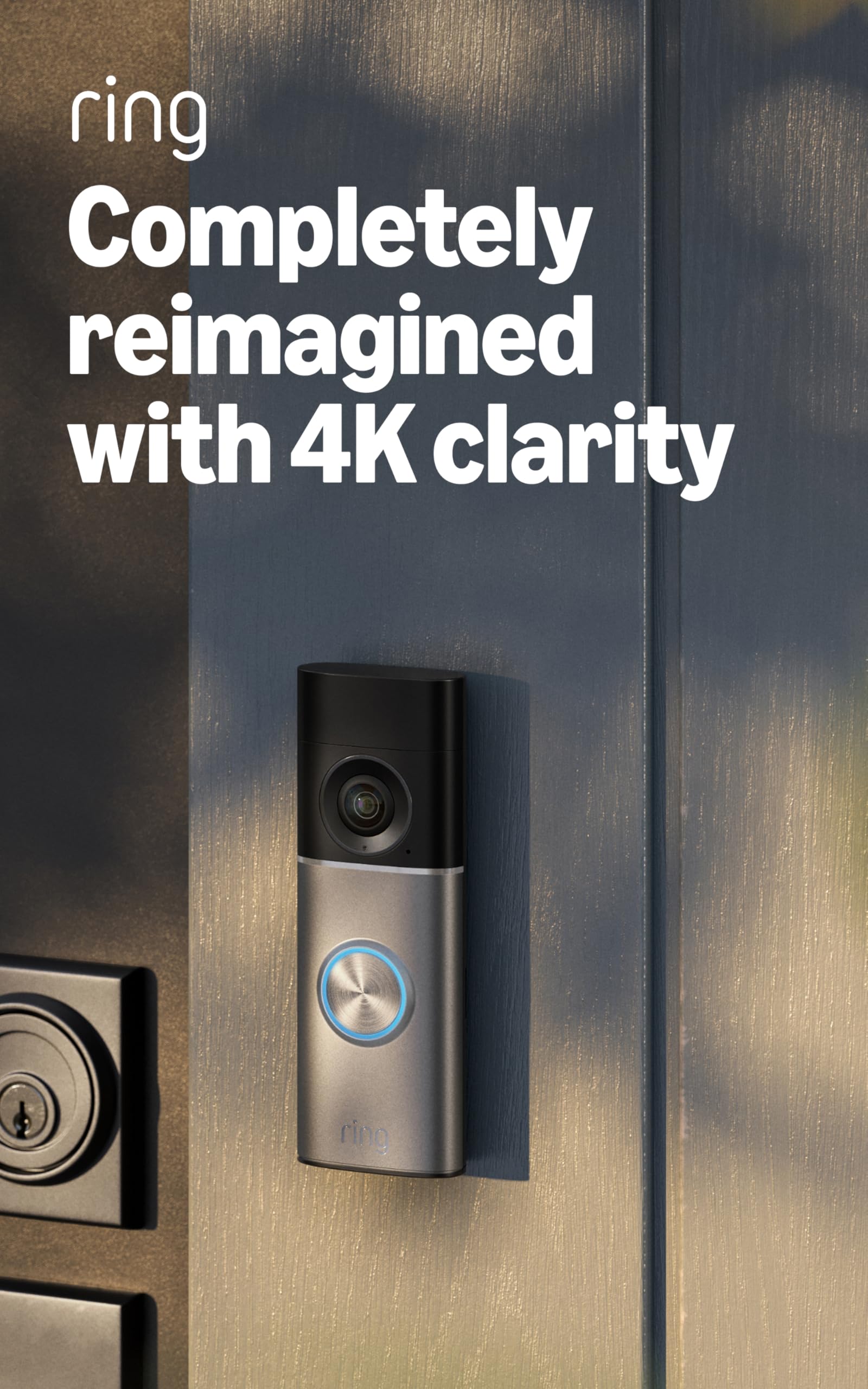
Struggling with blurry doorbell footage and noisy motion alerts? I bought the Ring Wired Doorbell Pro to get clearer video and fewer false alarms at my front door after a neighbor’s package went missing.
I picked this wired model because I wanted nonstop power and higher-resolution footage than my old doorbell offered. After a couple of weeks of daily use, the 4K video and quick Live View made package checks and porch conversations noticeably easier. The Ring app paired quickly, and motion alerts came through reliably on both iOS and Android.
Why I Bought It
My porch kept getting missed package deliveries and blurry night footage, so I wanted clearer evidence without upgrading my whole system. I looked at battery models and cheaper wired options, but chose this wired unit for continuous power and the promise of sharper video.
After a few days of use, I noticed much crisper daytime images and zoom that actually helped ID a package label from the driveway. The dark‑time performance improved clarity compared with my old doorbell, though low‑light shots still soften at longer distances. Setup was straightforward on an existing chime, but wiring made it less plug‑and‑play than battery alternatives.
Key Features
I spent a couple weeks with this Ring Wired Doorbell Pro and tested it in daytime, low light, and while checking the yard from inside. These are the features that mattered most during actual use, what worked smoothly, and where I noticed limits.
4K Video Quality
The retinal 4K video feed delivers noticeably sharper stills and clearer license plate detail when someone pauses on my porch. That extra 4K resolution helps when you need to crop or zoom without everything going soft, but it also demands solid upload bandwidth; on slower home internet, the stream will drop to a lower video quality. In practice, I saw crisp color video in daylight and good detail retention when reviewing recordings. The highly detailed video also holds up well when pulling freeze-frames from motion events.
10x Zoom
The 10x zoom proved useful for close inspection of distant objects, such as a package across the driveway, a clear advantage of this pro model over standard video doorbells. It’s a digital zoom that leans on the 4K sensor, so results stay usable only when the original footage is high quality and not pixelated by poor Wi‑Fi. Hand-holding zoomed Live View felt a bit jittery, but for freeze-frame checks and detail hunts it’s handy. Bird’s eye view adds another layer of spatial context for tracking motion across the yard.
3D Motion Detection
3D motion detection cut down on false alerts from trees and passing cars compared with basic motion sensors I’d used before. I could draw motion zones to focus on the walkway and avoid the street, and the intelligent alerts meant notifications felt relevant rather than constant. It wasn’t perfect; small movements near the edges still sometimes triggered alerts, but overall it reduced unnecessary pings. Pre-roll video captures the seconds before a motion event triggers, which helped me see what actually set off a notification.
Two-Way Talk with Audio
Two-way talk let me tell delivery drivers where to leave packages without running to the door, and smart responses made quick replies even faster. The Audio+ clarity is better than older doorbells I’ve owned, though voices can sound slightly tinny at certain angles. Latency was low enough for natural back-and-forth, but I preferred pushing a quick text when the other person struggled to hear over wind or traffic. The doorbell also works with Alexa, I could pull up a live stream on my Amazon Echo Show without opening the Ring app.
Using It Day to Night
I left the doorbell on my front porch for a couple weeks to see how it handled both bright afternoons and late evenings. Switching between color in low light and black-and-white in full darkness felt seamless, and the camera rarely missed a face under varying lighting conditions.
Low-Light Performance
In dim streetlight conditions, the image stayed surprisingly true to color, and portraits looked natural enough to recognize neighbors. When night fell and ambient light dropped, the picture flipped to crisp monochrome with improved contrast; details like license plates and package edges became easier to read.
The transition sometimes nudged itself a beat after the lights changed, so I caught a couple of seconds of grain during the swap. For routine night checks and package deliveries, the color night vision and low-light handling were solid and practical.
Weather Resistance in Real Life
Rainy afternoons and a windy evening didn’t faze the unit mounted by my door. I saw no water intrusion or fogging on the lens after downpours.
Cold mornings produced no startup issues; the doorbell powered up and streamed immediately. Heavy wind and prolonged exposure to the sun didn’t affect video clarity in the short term, though I’d want to check long-term durability across seasons before relying on it in extreme climates.
Pros and Cons
Pros
- I appreciated the sharp 4K Retinal image during the day; faces and package labels were noticeably clearer than with my previous doorbell. That extra resolution made it easier to verify delivery details without running outside.
- The 10x enhanced zoom came in handy when I needed to read a car license plate at the curb. Zoomed-in detail stayed usable enough for identification at a distance.
- Two-way talk with Live View felt responsive; I could quickly tell a delivery person where to leave a package without awkward delays.
- Low-Light Sight produced usable color in dim evening light, so I didn’t miss who rang late at night. In full darkness, the black-and-white mode kept motion and shapes distinct.
- Hardwired power relieved me from battery swaps. Once installed, it ran continuously, and I didn’t worry about charging.
Cons
- Some motion alerts were overly sensitive until I tweaked the detection settings; 3D motion detection helped, but it took a few days to reduce false alerts from passing cars.
- Advanced features like video descriptions require a subscription, so you don’t get the full experience out of the box unless you’re willing to pay extra.
- The premium finish looks good but shows dust and fingerprints more than I expected; it needs periodic wiping to keep it looking neat.
What Setup Was Actually Like
Wi‑Fi 6 made pairing quick once I entered the network details, and dual-band Wi-Fi support meant I could connect to either the 2.4 GHz or 5 GHz band, depending on signal strength. My older router needed to be within range for stable 4K streaming. The app walked me through transformer and doorbell wiring checks, which helped. If your transformer isn’t compatible, you’ll stall until you get the right adapter.
The setup felt DIY-friendly but not foolproof. If you’re comfortable with basic wiring and a screwdriver, you’ll be fine; if not, plan for a short pro install.
Who Should (and Shouldn’t) Buy This
If you want a wired doorbell camera that actually shows small details, this is worth considering. I liked the sharp video and the useful two-way talk when I needed to confirm deliveries without opening the door.
You should buy it if you want clearer-than-average footage for identifying faces or packages, prefer hardwired power for nonstop operation, and care about tailored motion alerts so you get fewer false alarms. The color in low light made night checks easier during my evening patrols.
Skip it if you need a battery-powered option, want a super-simple install without wiring, or prefer a cheaper doorbell that covers basic alerts without premium video. Also, rethink it if you rely on voice descriptions in Illinois, since that feature isn’t available there.
Final Verdict
After using the wired Ring for several weeks, I found it reliable for everyday front-door monitoring but not flawless. Video quality is crisp in good light and the wide view makes package spotting easy; low-light performance helps, but shadowed corners still lose detail at night.
Installation was straightforward on existing wiring, and the solid build feels durable. Motion alerts are timely, though the 10x zoom is more useful for checking details than routine use.
If you want a dependable wired doorbell with strong daytime video and practical features, this is a solid pick. Skip it if you need best-in-class night clarity or prefer a battery-powered option.
Frequently Asked Questions
Is the wired model meaningfully more reliable than the battery version?
I used the Ring Wired Doorbell Pro for a couple of weeks and noticed fewer dropouts than a friend who runs the battery doorbell. Hardwiring removes the need to recharge and keeps recording available during busy days, which matters if you get frequent alerts. That said, if you can’t run wiring easily, the battery doorbell still performs well for occasional use. Video storage through Ring Protect also stays uninterrupted when the unit is hardwired, which matters if you want up to 180 days of clip history on higher-tier plans.
Do you really need Ring Protect, or are the free features enough?
I relied on the free features for basic live view and instant alerts; they work fine if you only want real‑time checks. The Ring Protect subscription adds cloud video storage, longer retention, and AI descriptions, useful if you want to review footage or share clips after an incident. The basic plan covers one device and is a reasonable starting point. If you only care about seeing who’s there now, the free tier suffices, but if you want evidence or notifications summarizing motion events, the Ring Protect subscription is worth it.
How does it compare to Nest Doorbell and Eufy?
Having used this Ring Wired Doorbell Pro and tested a Google Nest and Eufy in the past, the Ring pro model stands out for higher video resolution and stronger zoom, which helped me read package labels from the sidewalk. Google Nest felt smoother with its software-driven person alerts and Google Assistant integration, while Eufy offered simpler local storage without mandatory cloud fees. The field of view on the Ring Wired Doorbell Pro is competitive, and the 4K clarity edges out 1080p rivals in detail. Choose Ring for image clarity and features, Nest for polished software, and Eufy for lower ongoing costs.
Are the privacy concerns about Ring still a real issue in 2026?
I pay attention to security updates and found Ring has improved transparency and pushed regular firmware patches. Concerns remain if you don’t lock down account access, use strong passwords, enable two‑factor authentication, and control shared user permissions. If you follow those practices, the risk drops considerably, but anyone uncomfortable with connected cameras should weigh that personal privacy trade‑off.