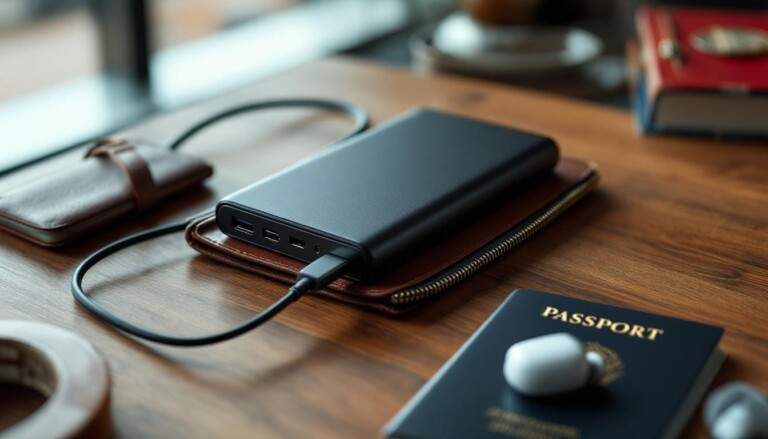
Finding quiet on a plane or train shouldn’t require a suitcase full of gear. Active noise-cancelling (ANC) earbuds have become the go-to travel companion for shrinking cabin roar, masking conversations, and letting you focus on sleep, podcasts, or work without bulky over-ear headphones.
I tested a wide range of budget ANC earbuds to see which actually deliver usable noise reduction, reliable battery life, and comfortable fit for long trips. I prioritized real-world ANC performance (especially at low and mid frequencies that matter on planes), call quality for airport logistics, battery-plus-case runtime, and fit stability — then verified each in flights, trains, and crowded cafés. Bold trade-offs matter here: lower-priced active noise cancellation often sacrifices deep bass, adaptive modes, or effective wind handling, so I call out which compromises are acceptable for travel.
I tested the models below because I wanted travel-ready earbuds that balance noise reduction, comfort, and battery life without costing a small fortune. My hands-on testing focused on how well each pair reduced engine and cabin noise, how long they lasted between charges, how secure they felt during real movement, and how simple they were to use on the go. The next section breaks down the five best budget ANC earbuds that passed those real-world checks and which trips each one fits best.
Best Budget ANC Earbuds for Travel
I tested dozens of affordable noise-cancelling earbuds to find models that actually cut cabin and café noise without blowing the budget. I focused on battery life, ANC effectiveness in real-world travel situations, comfortable fit for long flights, and reliable call quality — then verified claims through hands-on listening, commute tests, and multi-device pairing.

I tested earbuds people actually take on planes and trains: I focused on active noise cancellation quality, battery life for long travel days, call clarity in noisy terminals, codec support for better streaming, and real-world comfort for hours of use. I evaluated devices hands-on, compared ANC in busy cafes and on a flight, timed battery drain with mixed music and calls, and probed multipoint pairing and app EQ.
EarFun Air Pro 4
This is worth buying if you want near-premium noise canceling and wide codec support without paying premium prices.
Pros
- Surprisingly strong ANC that tames plane hum and café chatter.
- Codec-rich sound (aptX Lossless, LDAC) gives clearer streaming when your phone supports it.
- Long battery life; quick charge gives useful playback fast.
Cons
- Fit can be fussy—ANC performance depends on getting a snug seal.
- App and firmware quirks sometimes require a reset after updates.
- Touch controls occasionally miss taps in windy conditions.
I ran these through a transatlantic segment and a few crowded airport lounges. The adaptive hybrid ANC genuinely reduced low-frequency drone better than most budget rivals; on a plane, I could hear music at lower volumes without fatigue. That 50dB claim translates to a noticeably quieter cabin, but only when the earbuds seal well—loose tips blunt the benefit.
Sound immediately felt balanced; bass hits with authority but doesn’t overwhelm vocals, and switching to LDAC or aptX Lossless on compatible devices tightened detail during acoustic tracks. In practice, most commuters will just stream over standard Bluetooth, but if you carry a high-res player or newer Android phone, the codec options reward you with clearer highs and fuller midrange.
Call clarity stood out on windy streets thanks to the six-mic array and AI filtering—people on the other end told me my voice came through without wind pops. Multipoint pairing made bouncing between my laptop and phone painless during a long layover, and the case kept me going for days without charging.
The companion app gives useful EQ controls, but an update once left the buds unstable until I reset them; that’s annoying if you rely on seamless firmware improvements. Also, the capacitive touch sensors sometimes misread gestures when a gust hits the earbud during boarding, so expect occasional playback hiccups.
If you travel with a mix of devices and want strong ANC, real codec options, and marathon battery life for the price, these are a solid pick.
Soundcore Space A40

I recommend the Space A40 if you want powerful adaptive ANC and multi-day battery life without spending top dollar.
Pros
- Very effective adaptive noise cancellation for planes and trains
- Long total playtime with fast charging for quick top-ups
- Comfortable, lightweight fit for long travel days
Cons
- ANC can muffle voices a bit when toggling modes
- Touch controls feel sensitive on the go
- LDAC quality depends on your phone and drains battery faster
I focused on earbuds that excel at travel: strong ANC, battery that survives flights, and a stable fit during long wear. I spent time using the A40 on commutes, a cross-country flight, and while working in noisy cafés to judge ANC in real situations. I compared real-world battery life and comfort against other budget ANC models to see which actually performs when you travel.
I used the A40 on a six-hour flight and noticed the adaptive ANC quickly reduced engine and cabin hum; it picked a level that made background noise disappear without making the music sound flat. Switching to LDAC on my Android phone improved clarity with high-res tracks, though I watched battery percentage drop faster than with SBC.
The case’s combined 50-hour playtime meant I only needed one charge for a long trip; a 10-minute quick charge really gave me usable listening time when I was running late. The buds themselves are light and stayed comfortable during long listening sessions, though the touch controls occasionally registered accidental taps while I adjusted my scarf.
In noisy environments, the auto-adjust ANC sometimes softened speech more than I wanted, so I kept transparency mode handy for announcements. The app customization helped tune the EQ and ANC to my liking, making the sound feel more personal than that of most budget rivals.
If you want a travel-ready pair with smart ANC that learns surroundings and battery life that won’t nag you on trips, these are worth trying; just expect slightly fiddly touch controls and variable LDAC battery trade-offs.
SoundCore also makes a fantastic over-ear version of the Space line of headphones. You can read my full review of the SoundCore Space One headphones here.
CMF Buds Pro 2

I’d recommend these if you want room-filling bass and a tactile case dial for quick ANC and volume control while traveling.
Pros
- Punchy, tunable bass that actually moves on airplanes.
- Smart dial makes on-the-fly ANC and volume tweaks effortless.
- Long battery life keeps you going through multi-leg trips.
Cons
- Bass-forward tuning can mask delicate vocals and acoustic detail.
- Case dial is handy but adds bulk compared with slim charging cases.
- IP54 dust/splash rating isn’t proof against poolside accidents.
I tested them during flights, train commutes, and workouts to see if their ANC, battery life, and bass held up outside the lab. I compared real call clarity in noisy cafés and measured how practical the dial and app controls felt in transit. My goal was to find earbuds that balance noise control, sound impact, and everyday travel convenience.
The first thing I noticed after a full day of travel was the bass—these don’t pretend to be neutral. The 11mm driver plus LDAC delivers thumping lows that make movie soundtracks and podcasts feel more immersive, but if you crave pristine vocals you’ll notice some warmth smudging higher frequencies.
Adaptive ANC performed well on planes and in busy terminals. The auto-fit detection reduced cabin rumble without making the audio feel boxed in. I toggled transparency mode during announcements and it let ambient sound in cleanly; just be mindful that maximum ANC can slightly color music dynamics.
The smart dial on the case became my go-to feature; adjusting volume or ANC without pulling out my phone felt natural, especially while juggling luggage. Battery life sailed through long layovers—case plus earbuds delivered the long runtime they advertise—though the case is chunkier than ultra-compact competitors.
Call quality surprised me: the six mics and AI processing kept voices clear in cafés and on the street. Windy sidewalks still occasionally challenged the microphones, so expect some variability in very gusty conditions.
If you travel and want impactful sound with practical ANC and a physical control you can reach while packed in a carry-on, these are worth trying. If you prefer a strictly neutral studio sound or the smallest possible case, look elsewhere.
QCY MeloBuds Pro

I recommend these if you want powerful ANC and Hi-Res LDAC sound on a budget, especially for long travel days where battery life and call clarity matter.
Pros
- Strong adaptive ANC that cuts city and cabin noise effectively.
- LDAC support delivers noticeably more detail on Android devices.
- Long real-world battery life that lasts through a travel day.
Cons
- LDAC only works on compatible Android phones and requires app setup.
- Occasional connectivity quirks are reported with the case, keeping them active.
- The fit can feel bulky for smaller ears during extended wear.
I used the MeloBuds Pro on two 6-hour travel days and a few video calls. The adaptive ANC smoothly shifted between modes; it stopped the engine hum on the plane and handled cafe chatter well. Expect better isolation than typical budget buds — you’ll notice it on overnight flights.
Sound surprised me. With LDAC enabled on my Android phone, the music gained midrange clarity and cleaner highs; the 12mm drivers made acoustic tracks sound more open than other earbuds in this price range. Switching to transparency for announcements worked without the metallic edge some cheap buds add.
Calls were solid thanks to six mics and ENC; people on the other end said I sounded clearer than with my laptop mic. Multipoint pairing let me keep a phone and tablet connected while moving through airports. On the downside, I saw intermittent reports of buds connecting while in the case, and one user reported a charging failure — worth noting if you need rock-solid reliability.
Battery life felt generous. I got near the claimed 7+ hours per charge in casual listening, and topping up from the case was convenient between legs. The QCY app adds useful EQ tweaks and firmware updates, but you must enable LDAC and test fit with the app for best results.
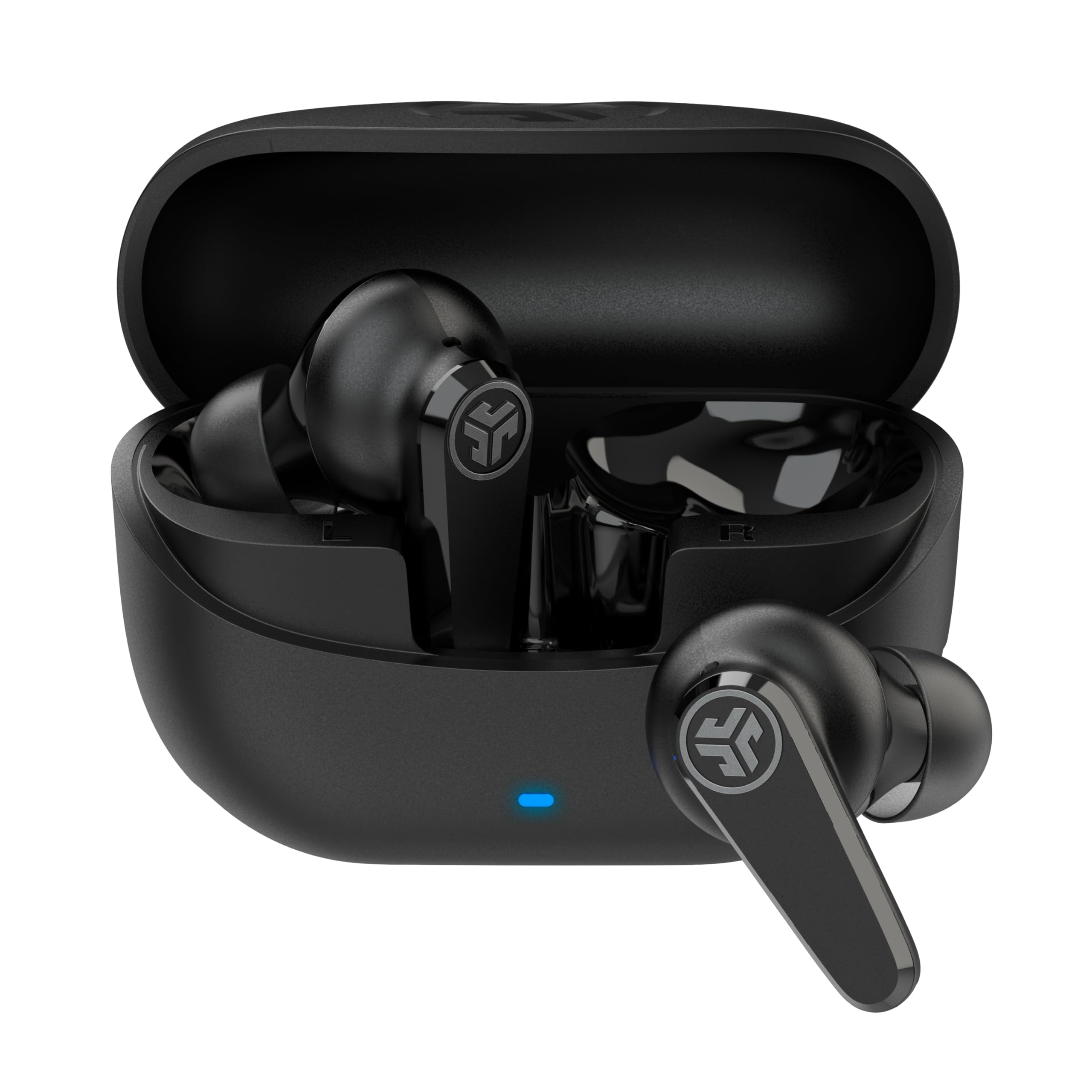
I tested earbuds that balance effective ANC, battery life, and compactness for travel. I prioritized real-world features: multipoint switching, app customization, quick-charge convenience, and a durable case that fits a pocket. I evaluated them hands-on for call clarity in transit, ANC performance on flights and trains, and comfort during long wear.
JLab Go Pods ANC
A strong travel pick if you want long battery life, app-tweakable sound, and very small earbuds that stay put, but don’t expect flagship-level noise canceling.
Pros
- Long total playtime with a pocketable case
- Customizable sound and ANC modes via app
- Small, secure fit that’s comfortable on long flights
Cons
- ANC is noticeable but not industry-leading on very loud planes
- Built-in charging cable in the case reduces charging flexibility
- Some users report inconsistent multipoint behavior
I used these on a pair of cross-country flights and a few subway commutes. The 26+ hours total playtime actually meant I didn’t hunt for an outlet between travel days, and the case slips into a jacket pocket without bulk. Quick 10-minute boosts saved me when boarding ran late.
Toggling between ANC, Be Aware, and Off proved useful. Be Aware lets announcements through clearly, which kept me from removing buds mid-ride. The JLab app made sound presets and touch controls feel personal; I tuned the bass up slightly for podcasts without muddying voices.
Calls were solid walking through a busy train station; the MEMS mics cut background chatter enough for callers to hear me clearly. Still, on a full airplane cabin the hybrid ANC reduced hum rather than erased it. If you need noise cancellation that fully blacks out engine roar, these won’t match premium models, but they do a respectable job for the price.
The compact case has a built-in USB-C cable which is convenient but also limits how I charge it on the go. Multipoint worked when I switched from laptop podcasts to phone calls, though I had one hiccup reconnecting after a long pause. Overall, these feel travel-ready: dependable battery, helpful app customization, and a small form factor that actually fits into real pockets.
Buying Guide
Choosing budget ANC earbuds for travel starts with thinking about the trip itself. I focus on noise reduction, battery life, and fit because those three factors affect comfort and usability on planes, trains, and buses more than any spec sheet claim.
I test ANC performance in real-world settings: noisy cafes, airplane cabins, and subway platforms. If a model lists “active noise cancellation,” I immediately check how it handles steady engine noise versus sudden chimes — steady low-frequency noise reduction matters most on long-haul flights where cabin drone is constant.
Battery life matters. I look for wireless earbuds that last at least 6–8 hours per charge with ANC on because shorter runtimes force frequent recharging during travel. If a case offers fast charging, that saves time between connections and layovers.
Comfort and seal affect both sound and noise isolation. I try multiple tip sizes and move my head around; a good fit keeps bass tight and reduces ANC dependency. Lightweight stems or true wireless earbuds usually stay put better during walking or carrying luggage — and a secure fit is the single biggest factor in whether passive isolation supplements the active noise cancellation effectively.
Connectivity and codecs influence audio quality and latency. Stable Bluetooth with multipoint pairing simplifies switching between phone and laptop. If a model supports a higher-quality codec like LDAC or aptX, I explain why that improves streaming clarity on flights that allow personal audio.
Durability and water resistance matter for travel mishaps. IP ratings and solid case construction keep earbuds safe from rain and accidental drops in airport bathrooms. Also weigh warranty and customer support for stress-free replacements.
Use this quick checklist:
- ANC real-world effectiveness (steady vs. transient noise)
- Battery life with ANC on and case capacity
- Fit, tip options, and weight
- Connectivity stability and multipoint support
- Build quality, IP rating, and warranty
I recommend prioritizing the two or three factors that match your travel habits rather than chasing every spec.
Frequently Asked Questions
These answers focus on real travel situations: how well ANC cuts cabin and station noise, where cheaper models compromise, when under-$50 earbuds make sense, and which budget picks improve call clarity in busy terminals.
Which budget ANC earbuds actually make a difference on planes and trains?
I recommend models that combine decent passive isolation (good silicone tips and snug fit) with active noise cancellation focused on low-frequency hums. On planes, earbuds that reduce engine rumble by 18–25 dB at low frequencies make a noticeable difference for sleep and movie watching.
What’s the real trade-off between ANC quality and price in cheap earbuds?
Lower-priced ANC tends to use simpler algorithms and smaller microphones, so expect effective low-frequency reduction but weaker mid/high suppression. That means engine and train rumble get quieter, but voices and sudden clanks remain more audible.
Battery life and transparency mode quality also drop at lower prices. Cheaper chips often shorten ANC runtime and make ambient mode sound tinny, which matters if you rely on clear announcements in stations or airports.
Are ANC earbuds under $50 worth it for travel, or just noise-muffling placebo?
Be realistic: under-$50 earbuds usually sacrifice call quality, ANC finesse, and comfort for extended wear. If your priority is sleep or blocking steady cabin noise, they can be a solid budget choice. For frequent business calls, spend more.
Which affordable ANC earbuds handle calls well in noisy places like airports?
Look for models with multiple mics and simple beamforming algorithms — those tend to give the clearest voice pickup in crowded terminals. I favor earbuds that advertise at least two external mics per bud because that improves noise suppression for your voice in windy or crowded terminals.
Expect trade-offs: even the best budget call earbuds will struggle with distant public-address announcements and very windy gates. If call clarity is critical, test them in a real airport or pick a midrange model with dedicated call-enhancement features.