Smart homes aren’t just about flashy gadgets or the latest tech trends. They’re about making everyday life smoother, safer, and more efficient — whether you live in a house, condo, or apartment. And you don’t have to be a tech wizard to enjoy the benefits. Even small upgrades can make a big difference.
I started with just a couple of smart plugs. Now, I never stress about leaving the heater on or wondering if the door’s locked. And yes, my entire house lights up when I say, “Let there be light.” That’s the beauty of smart homes — they adapt to you.
Over time, I’ve discovered that the biggest impact comes from combining devices into a system that works together. You don’t need a massive budget or a full remodel — you just need the right approach.
Here’s what I’ve learned — and how you can start automating your space without turning it into a sci-fi movie set.
🌅 Smart Homes Automate Your Mornings and Nights
The most underrated benefit of smart homes is how they make your mornings and evenings effortless. By setting up simple routines, you can remove dozens of tiny daily decisions.
Imagine:
- Lights slowly turning on as your alarm goes off.
- Your coffee brewing the moment you say, “Alexa, good morning.”
- Bedroom lights dimming, doors locking, and the thermostat adjusting when you say, “Goodnight.”
It’s not about showing off — it’s about removing friction from your day. Whether you’re using Alexa, Google Home, or Apple’s HomeKit, routines can be as simple or as complex as you want.
For example, my weekday morning routine turns on the lights in the kitchen, starts the coffee maker, and reads me the news headlines while I get ready. At night, a “Goodnight” command locks my doors, adjusts the temperature, and plays white noise. These little touches add up to a calmer, more predictable day.
🎛️ Smart Homes Make Control Simple
If you’ve ever downloaded yet another app to control a single device, you know how frustrating it can be. Smart homes solve this by centralizing control.
You can:
- Use voice commands like “Turn off all the lights” or “Preheat the oven.”
- Control multiple devices at once with a single scene (e.g., “Movie Night” dims the lights, lowers the blinds, and turns on the TV).
- Use a universal smart remote to manage TVs, lights, and the AC in one place.
This is especially helpful for guests or less tech-savvy family members. Instead of giving someone a crash course in your home’s apps, you can hand them a remote or show them one voice command.
Another underrated option is wall-mounted smart panels. These act like central dashboards, letting you adjust lights, check security cameras, and control music without carrying your phone around.
🛡️ Stay Secure from Anywhere
Security is one of the top reasons people invest in smart homes — and for good reason. Smart cameras, sensors, and video doorbells allow you to:
- See who’s at the door, even when you’re not home.
- Get instant alerts if a door or window opens unexpectedly.
- Monitor deliveries or cleaners remotely.
It’s not just about preventing break-ins. Smart security systems can give you peace of mind whether you’re on vacation or just upstairs. For example, I use a video doorbell to check on package deliveries while I’m away. Motion alerts let me see if the dog walker has arrived, and smart locks mean I can let them in without handing over a key.
🌱 Save Energy Without Thinking About It
A great smart home isn’t just convenient — it’s efficient. Smart thermostats, lighting, and appliances can help you cut down on utility bills without sacrificing comfort.
For example:
- Smart thermostats learn your schedule and adjust the temperature automatically.
- Smart lighting can auto-dim at sunset or turn off when no one is home.
- Energy monitoring plugs can track how much power each device uses.
These tools aren’t just for eco-warriors — they make financial sense too. The U.S. Department of Energy’s Energy Saver guide has practical tips on how smart technology can help you save money and reduce energy waste.
📈 Expand Gradually and Strategically
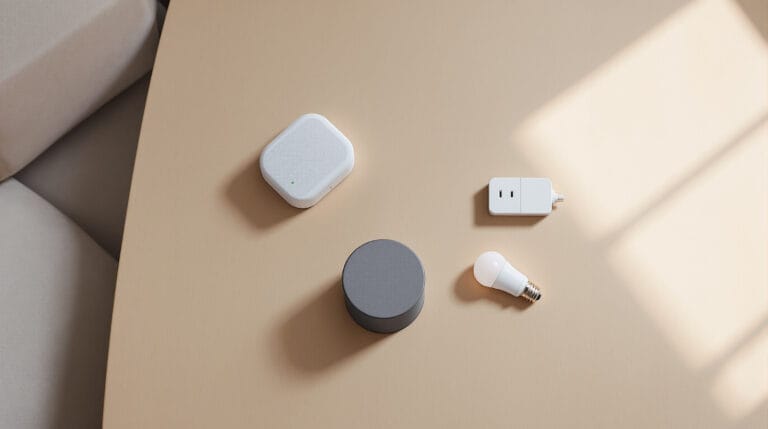
You don’t have to buy every device at once. In fact, one of the smartest ways to build a smart home is to start with a hub or smart speaker, then add devices as you go.
Begin with:
- A voice assistant like Alexa, Google Home, or HomePod.
- A few smart plugs or bulbs for instant automation.
- A security camera or video doorbell for peace of mind.
Once you see how much easier these small upgrades make life, you can expand into smart locks, thermostats, blinds, and even kitchen appliances.
The key is compatibility. Stick to one ecosystem (Alexa, Google, or Apple) as much as possible to avoid frustration later.
🎬 Build Scenes for Everyday Moments
Scenes are one of the most fun and practical parts of smart homes. They let you control multiple devices with a single command.
Some of my favorites:
- “Dinner Time” – Turns on warm lighting, plays background music, and turns off the TV.
- “Workout Mode” – Brightens the lights, turns on a fan, and starts a workout playlist.
- “Away” – Locks doors, turns off all lights, and arms the security system.
Once you’ve set them up, you’ll wonder how you ever managed without them.
🏠 Getting Started with Smart Homes
If you’re ready to dip your toes into the world of smart homes, here’s a simple roadmap:
- Pick your platform – Alexa, Google, or Apple’s HomeKit. Look for Matter compatible devices if possible.
- Start small – Smart plugs, bulbs, or a single smart speaker. –>Read about one of my favorite smart plugs here.
- Automate one routine – Morning lights, coffee brewing, or bedtime settings.
- Test and adjust – See what works for your household and what doesn’t.
Remember: a smart home should fit your lifestyle, not the other way around. Start with the features that will have the biggest daily impact, and expand from there.
📬 Want More Smarter-ish Tips?
Subscribe below to get weekly smart gear picks, how-to hacks, and tech that actually makes life easier — not harder.